When Speed Meets Sustainability: Our CERAWeek Takeaways on Accelerating the Energy Transition

Last week, I had the privilege of representing Paces at CERAWeek, often called the "Super Bowl" of the energy industry. The dominant conversation across every session and hallway discussion was unmistakable: securing American energy supremacy while rapidly expanding our generation capacity is no longer just an aspiration—it's an economic and national security imperative.
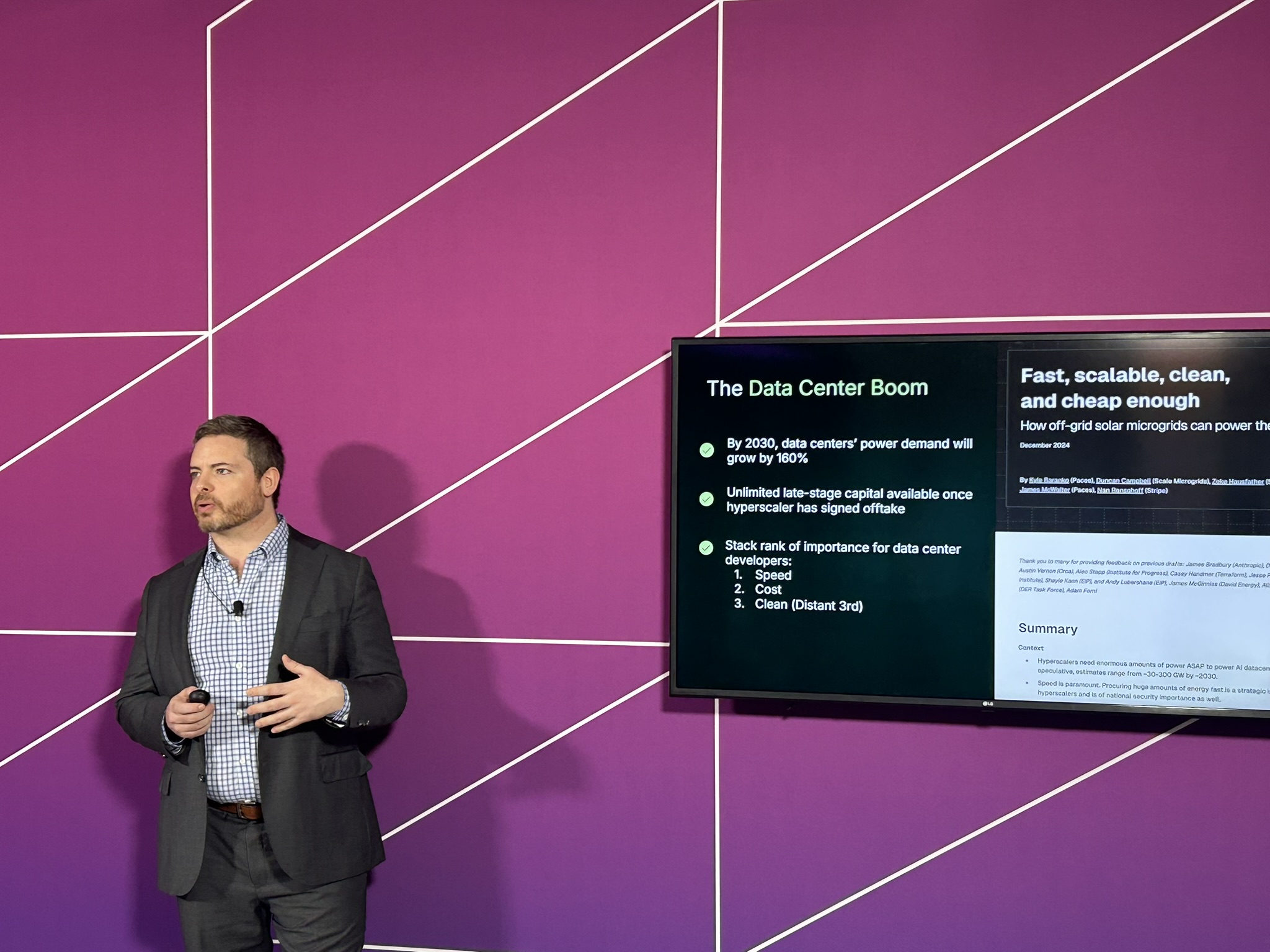
The main conference halls buzzed with traditional energy executives debating how to maintain America's global energy leadership, while at the Innovation Agora , discussions centered on how renewables can meet surging demand and build true energy resilience amid unprecedented electrification growth. This dual conversation reflected the industry's recognition that our path forward requires multiple solutions deployed at unprecedented speed.
At Paces, we know and believe in renewable energy’s critical role in this expansion. This belief is supported by timely data released by Solar Energy Industries Association and Wood Mackenzie that revealed that solar alone accounted for 66% of all new electricity-generating capacity added to the US grid in 2024. This remarkable statistic confirms that renewables aren't just part of America's energy future, they're actively building it today as the most efficient, scalable option to increase capacity and support electrification-driven load growth.
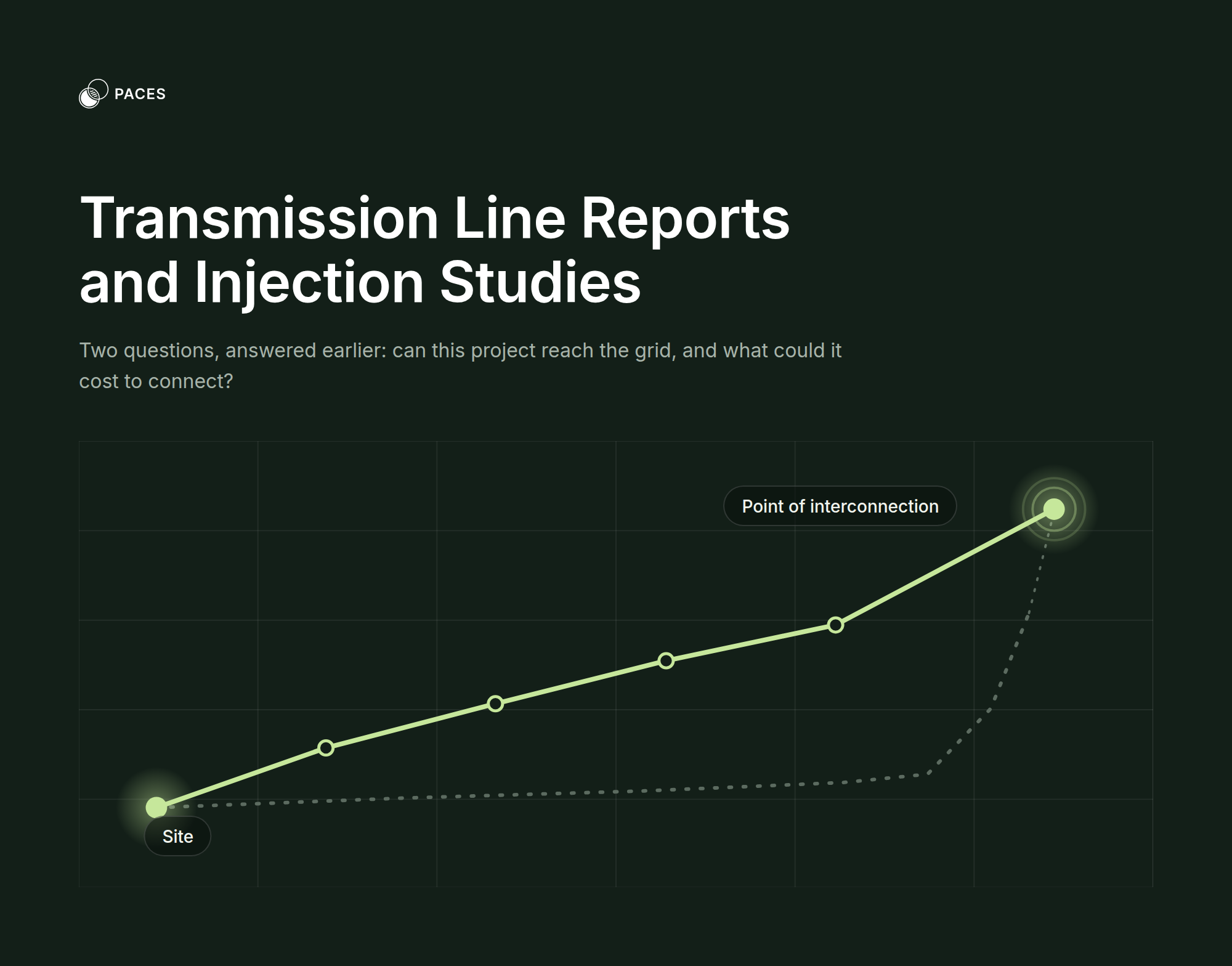
One way that the industry can dramatically accelerate this development is by automating pre-NTP desktop analysis, positioning renewable energy as the primary solution to meet rapidly growing energy demands while strengthening American energy independence.
The Problem With a Pure Oil and Gas Play
As highlighted in our recent whitepaper with Stripe and Solar Microgrids, we recognize the strategic value of hybrid solutions that intelligently combine renewables with natural gas to accelerate self-reliant data center deployment. However, relying purely on oil and gas and ignoring renewables to solve load growth issues is not a financially sustainable solution, in addition to being detrimental to our climate. Gas prices are volatile due to increased geopolitical instability and fluctuating demand. Additionally, supply chains for equipment, like gas generators, are extending into the 5+ year time horizon. Major manufacturers have publicly stated they are hesitant to increase supply due to market uncertainty, stricter emissions regulations, and the accelerating global shift toward renewable energy, further constraining availability.
Renewables on the other hand, are the fastest-growing energy source, rapidly increasing global capacity while reducing reliance on fossil fuels. According to the SEIA and Wood Mackenzie report, solar has grown exponentially, with capacity increasing by 21% from 2023, and it continues to be the fastest-growing energy source due in large part to it’s cheaper lifetime cost of production. Unlike gas generators, which do not roll off an assembly line but are custom-made, renewables benefit from mass production, reducing costs and accelerating deployment. This difference makes gas equipment supply chains more fragile, with extended lead times and production bottlenecks, while renewables can be deployed quickly, often within months, to meet rising energy demands.
Improving Renewable Development Timelines to Meet the Challenge
Renewables still face some time-to-deployment hurdles due to traditional project development being sequential. When a single factor can derail an entire project, investing heavily in projects that may fail is inefficient and wastes money and resources. After working closely with leading developers to develop and derisk projects, we introduced the Accelerated Development Framework (ADF). ADF is a way to leverage software automation to derisk project issues in parallel rather than sequentially. The goal of ADF is to quickly find the most successful opportunities to move forward with, so your team spend resources on projects with no chance of success.
At Paces we’ve been implementing ADF by obsessing over the project development process and leveraging our world-class data and technology to automate and de-risk site selection. We believe that anyone can use ADF, and we welcome its use to make renewables the choice that makes the most sense from a cost, time, and climate perspective.
Renewable Energy at Scale: ADF as the Catalyst for America's Energy Future
If CERAWeek 2024 demonstrated anything, it's the industry-wide consensus that accelerating energy deployment is no longer optional—it's imperative for supporting electrification growth, powering next-generation data centers, and securing America's leadership in AI. The question isn't whether we need to move faster but how. With ADF and the right technology partners, we believe renewables can be the answer.
Sign up for emails
Find the right sites faster, assess feasibility with world class data, and track progress across your entire project pipeline with software built to compress your workflow.
.png)