What the 2026 Election Means for Data Center Developers
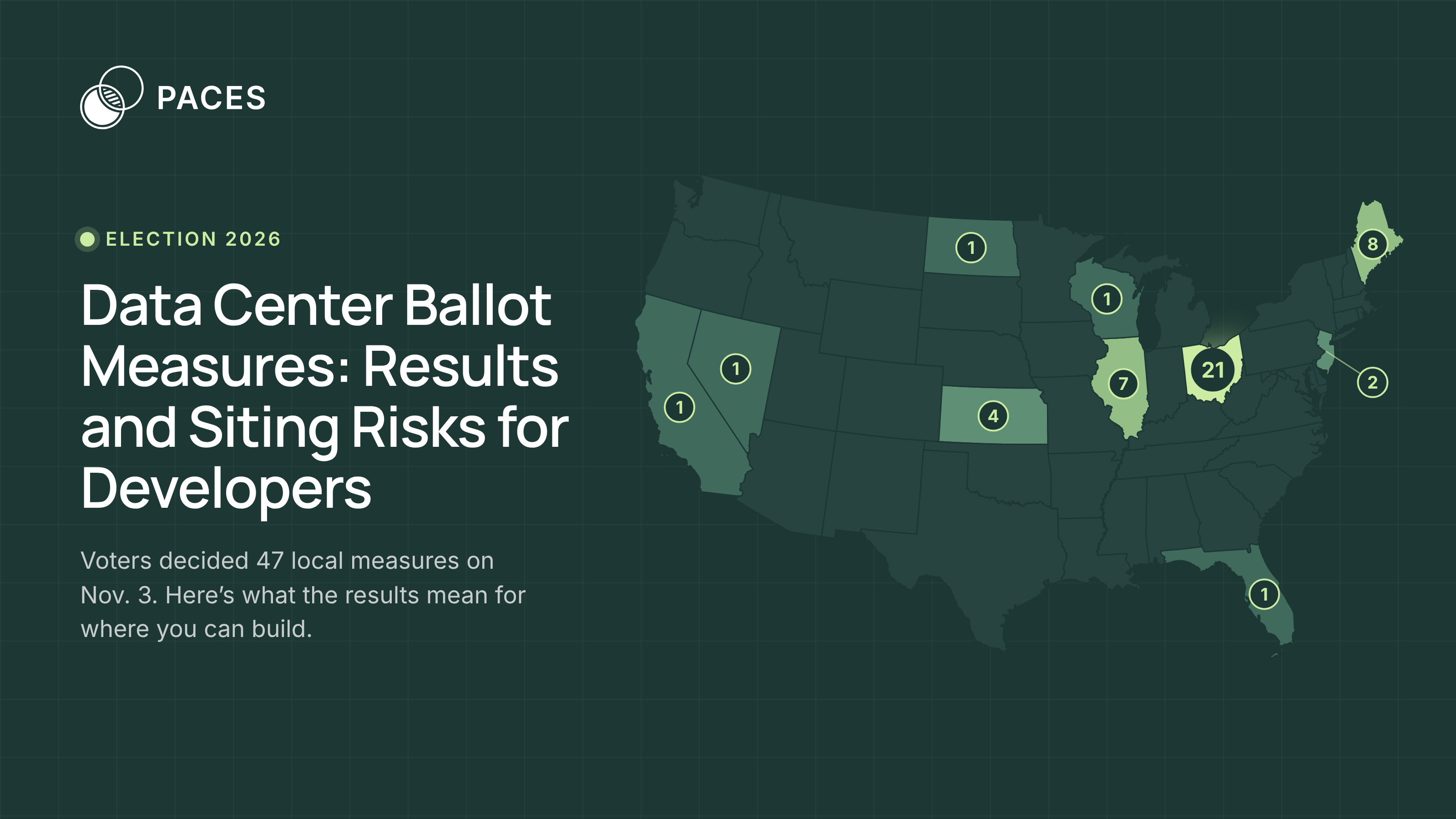
When a data center project goes to a local vote, the community usually says no. On November 3, voters across 10 states weighed in on data center bans, megawatt caps, moratoria, and rezonings, and the anti-data-center side won nearly every time.
However, projects being turned down doesn’t mean the work is going to stop; there is too much demand to build the physical infrastructure essential to US global leadership. Instead, Paces has put in place the solutions to help developers work in greater alignment with their host communities.
Local voters and state regulators both pushed back
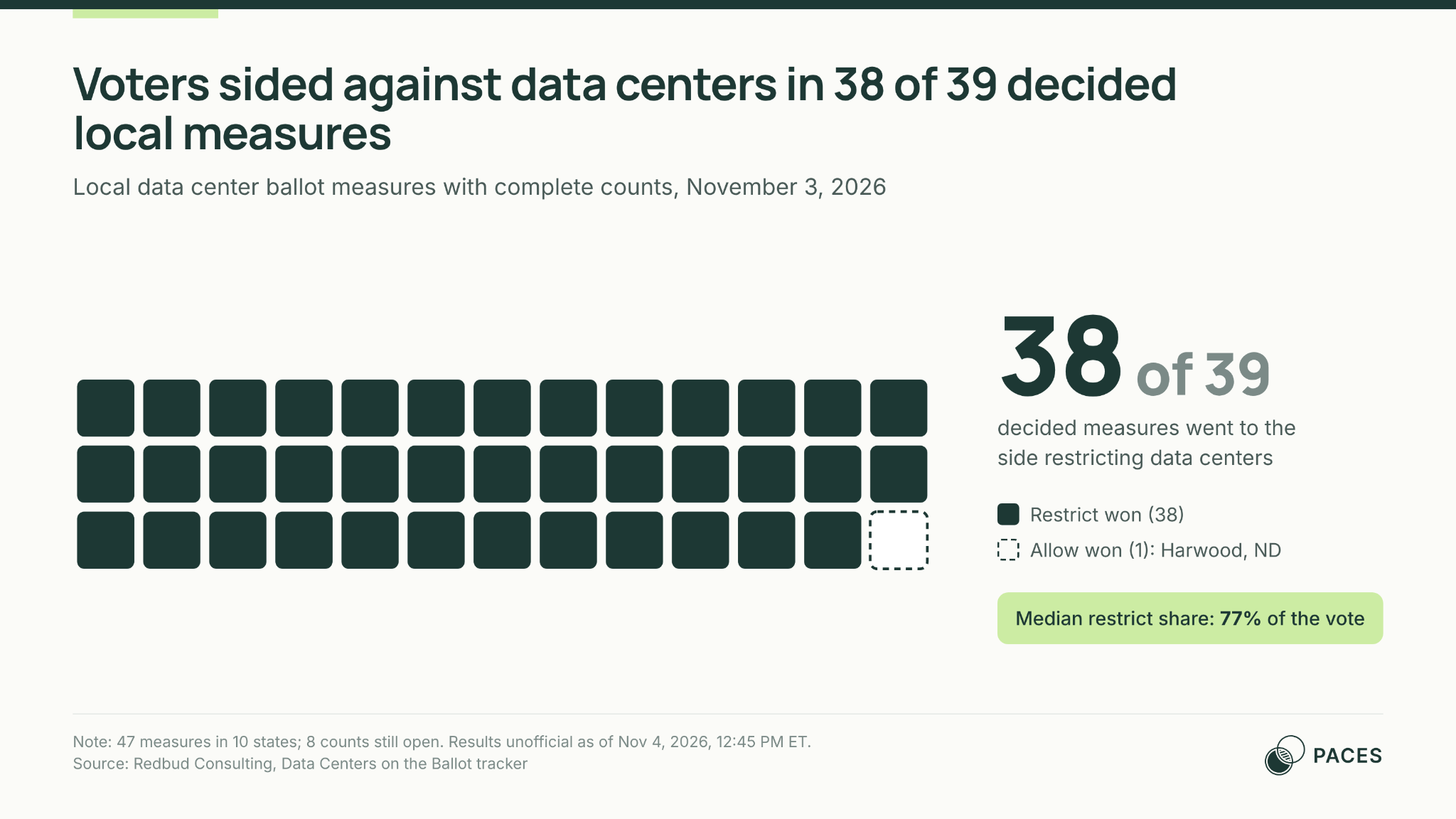
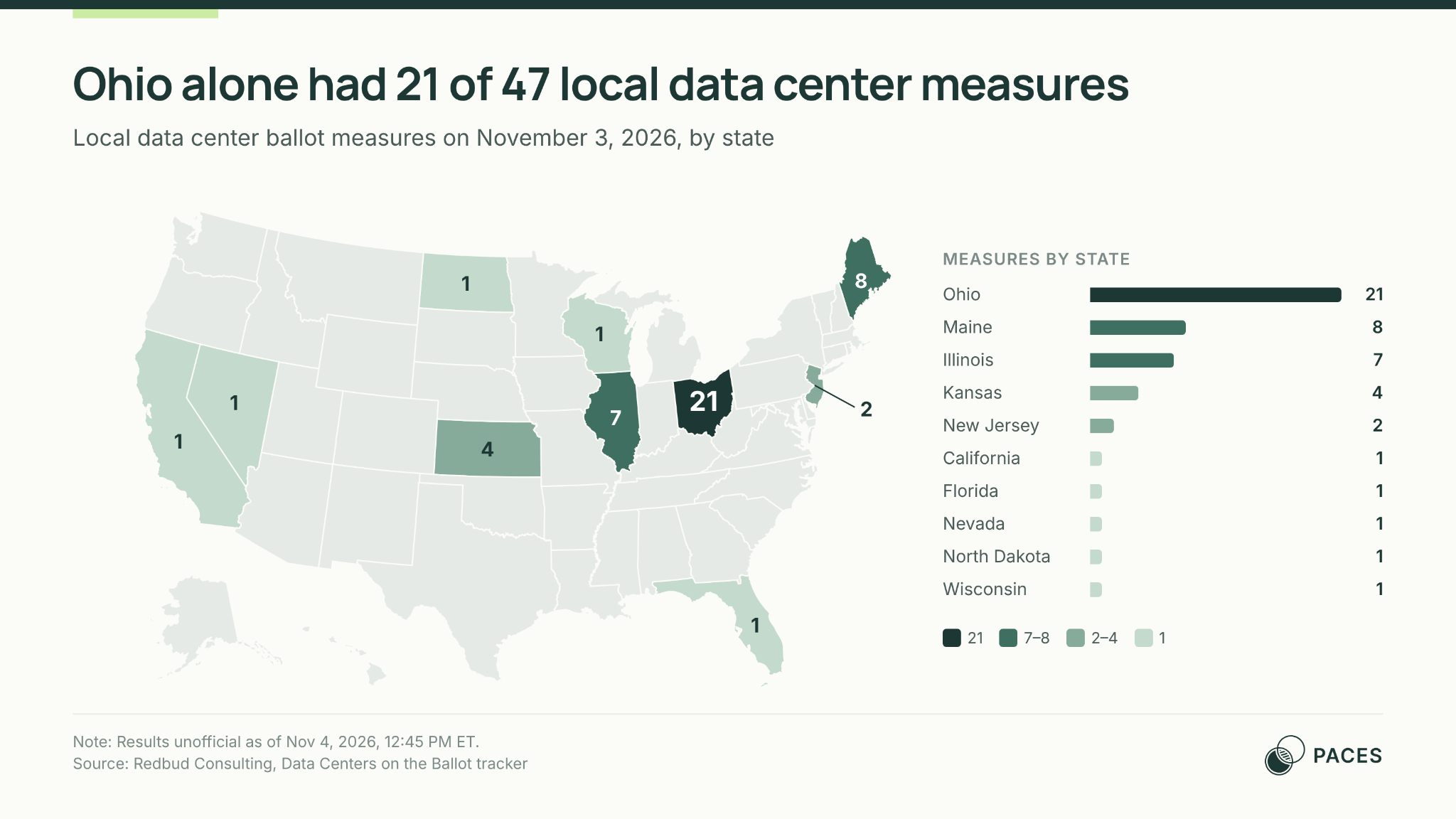
As of the morning after the election, Redbud Consulting’s Data Centers on the Ballot tracker showed 46 local data center measures across 10 states. Of the 38 with complete counts, 37 went to the side restricting data centers, usually with about 77% of the vote.
Four trends stood out:
- Framing didn’t matter. Voters opposed data centers whether the measure was a ban or an approval, and whether residents or the local council put it on the ballot.
- Earlier approvals weren’t safe. Voters overturned rezonings and development agreements that local officials had already approved.
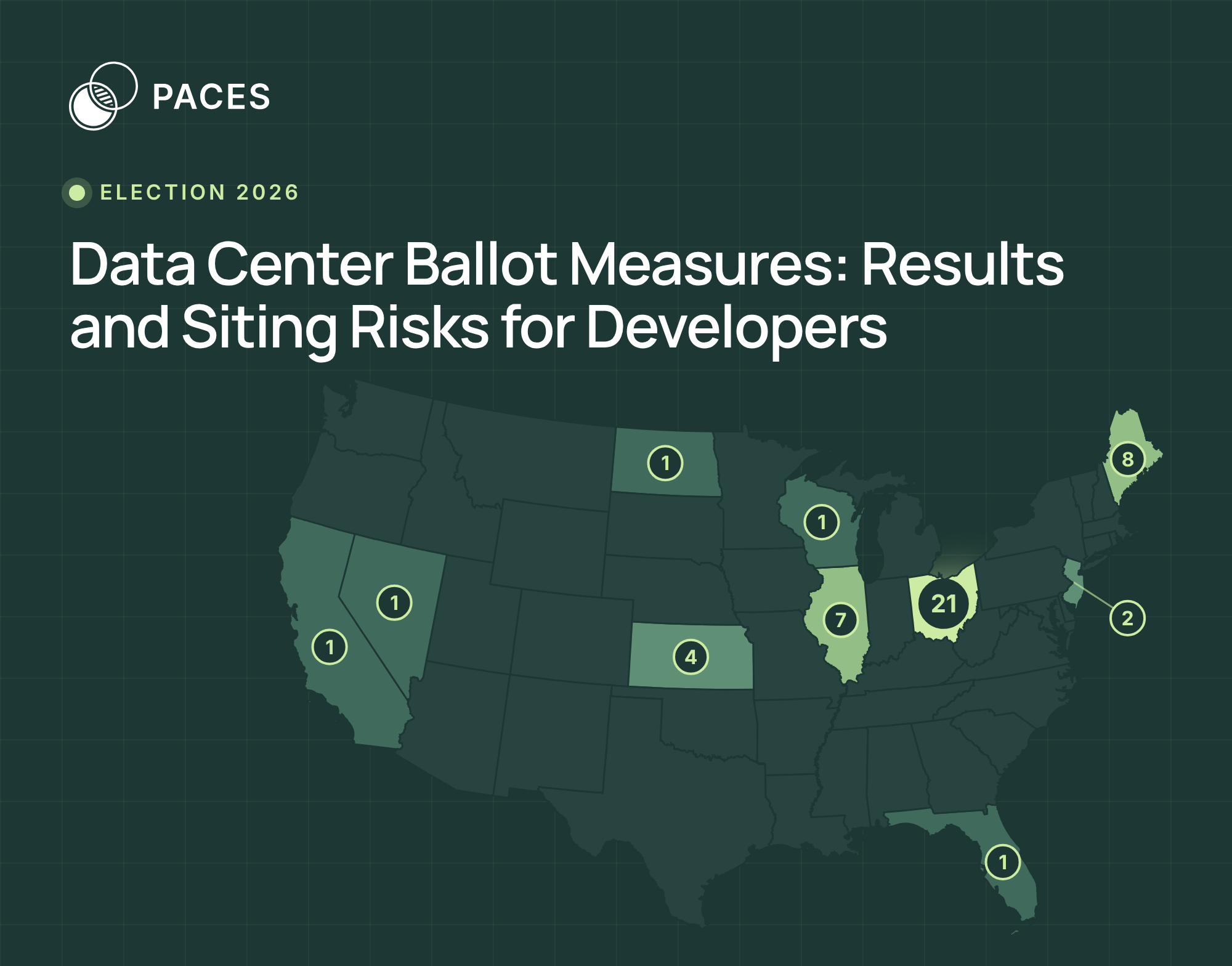
- Restrictions are spreading as copies. Nearly identical 25 MW caps passed or led in eight Ohio cities, which had 21 of the measures.
- The pushback reached state regulators. In Georgia, Democrats won control of the Public Service Commission for the first time in decades. The new majority has called for data centers to cover their own costs or for a pause on new development.
Battery storage is getting bundled in
If you develop battery storage, two Kansas results deserve a closer look. Voters in El Dorado approved a ten-year ban on "high-impact data centers and large battery storage" with 71.5% of the vote, and Americus passed a similar ban with 68.3%.
In both towns, storage shared a ballot question with data centers, and the two were restricted together. In these communities, voters treated "large energy infrastructure" as one category, whether it holds servers or battery cells.
Solar developers aren't immune, either. Several measures this cycle (including Grove City, Ohio's community consent amendment and Janesville, Wisconsin's voter-approval rule for projects over $450 million) apply to large developments in general. A utility-scale solar or solar-plus-storage project could trigger them just as easily as a hyperscale campus.
Community sentiment must be factored in early
At Paces, we see it in our data. Community sentiment is now as fundamental to siting as land, power and permitting. A site can look great on paper and still have a fatal flaw that means it will never get built.
Local votes also spread from town to town. This year, nearly identical 25 MW caps appeared on the ballot in eight Ohio cities at once, so a measure in one jurisdiction is an early warning for its neighbors. A project stopped at the ballot box loses the time and money already spent on land, interconnection, and permitting. Screening for local risk up front costs far less.
Why local risk now belongs in diligence (and what that means for M&A)
Land, interconnection, and power are still the first questions in early-stage development. But November 3 showed that a site can clear zoning, win council approval, and still be stopped by a referendum or charter amendment months later. Wells, Maine even passed a moratorium that applies retroactively.
Buyers take on this risk too. When a larger developer or investor acquires a project, they inherit its community history along with its land rights and queue position. A petition drive, a neighboring town's moratorium, or a jurisdiction that allows citizen-initiated charter amendments are all risks that used to surface late, if at all. Now they need to be part of diligence from day one, right alongside reviewing the seller's data room.
We expect this to drive more project turnover. As local pushback raises the cost and timeline of getting shovel-ready, some smaller developers may decide to sell earlier rather than carry that risk themselves. For buyers, that opens the door to good opportunities, as long as they can tell which projects have a real path forward and which are one ballot measure away from a write-off.
Want to learn more about what you need to know before you close a deal?
Join us for Paces Accelerate: M&A Diligence, Live.
What to screen for before you commit to a site
At these margins, trying to win a local vote is a long shot. The better strategy is to spot the risk early and choose sites where your project fits. Before you commit capital, ask things like:
- Is there an active moratorium, or a petition circulating to start one?
- Have neighboring towns passed bans, megawatt caps, or voter-approval rules?
- Would a general "large development" or community consent rule apply to your project?
- Is the site already industrial, such as a brownfield or retired power plant?
The closest races on November 3 were at existing industrial sites, including zoning votes for data centers at the retired Killen and Stuart power plants in Adams County, Ohio (59.7% and 52.6% restrict). Land with a heavy-industry history and existing grid ties still drew opposition, but far less of it.
Most of these signals are public record well before a measure reaches the ballot.
We're still going to build. We need to build better.
Demand for data centers, and for the solar and storage that power them, remains strong. November 3 showed that local voters now decide where much of that capacity can get built, and developers and buyers need to know that before they option land. Teams that screen for local risk from the first site review will spend less on projects that were never going to make it.
That's where Paces comes in. Our platform helps developers and investors evaluate sites for data centers, solar, and BESS with local risk in view from the start, so you can focus on the projects with a real path to completion.
To stay up to date on the latest industry news, insights, and Paces solutions, subscribe to our newsletter.
Results cited are unofficial as of November 4, 2026, and may change as counties certify.
Stay Connected
Get the Paces perspective on the grid, permitting and power markets, plus new product launches and tools that help developers decide in days.