The $98B warning: Power-ready isn’t shovel-ready
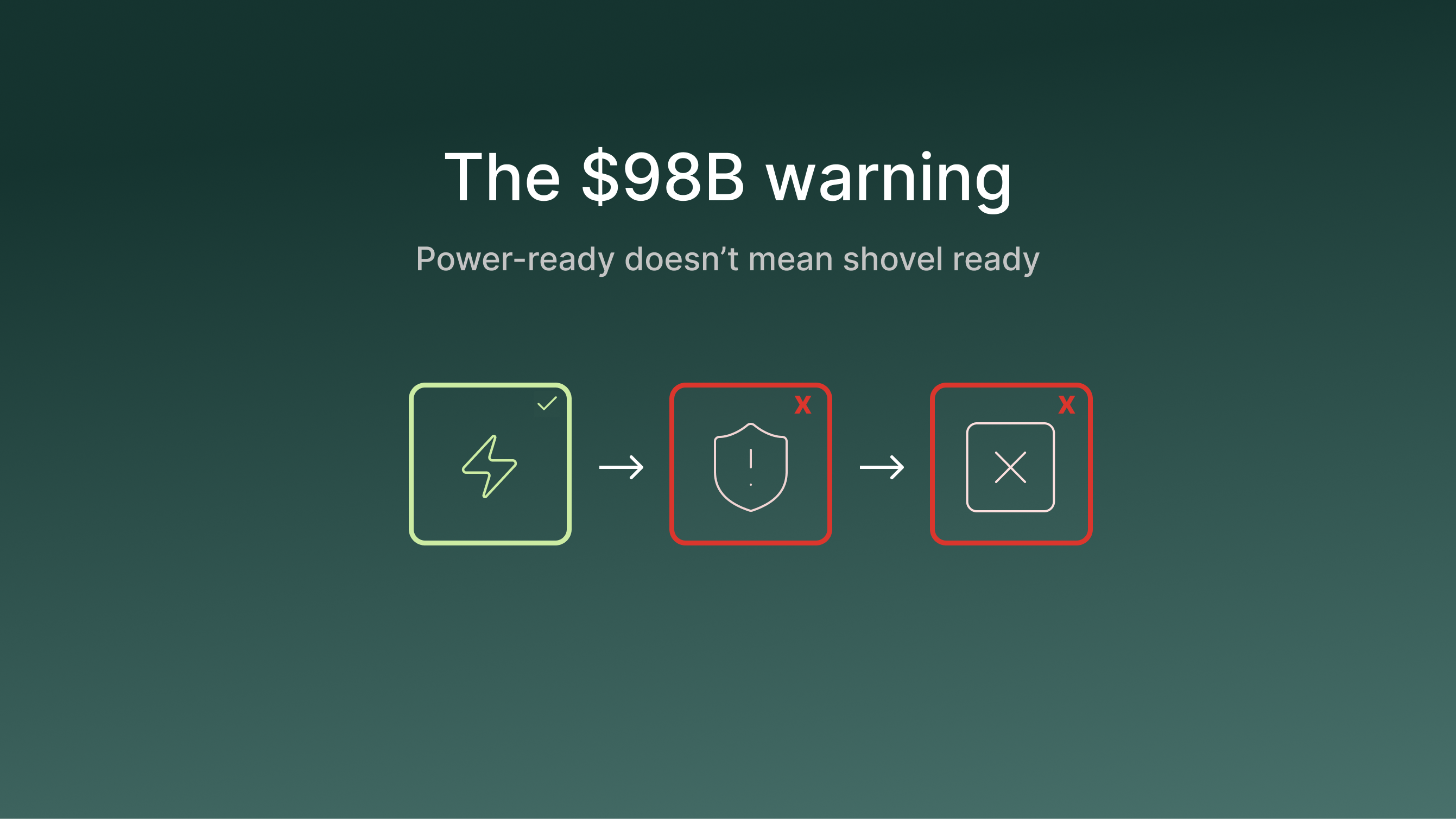
In Q2 2025, more data center investment was blocked or delayed than in any prior period on record: $98 billion in a single quarter, more than all previous quarters since 2023 combined.
Twenty-five projects were canceled due to local opposition that year alone, quadrupling from 2024. Amazon withdrew a 7.2-million-square-foot proposal in Virginia. The Prince William Digital Gateway, a $24.7 billion development, has been tangled in lawsuits for years.
What killed these projects wasn’t a lack of power; it was everything else.
Power is the gatekeeper. Additional risks live on the other side.
Power availability is the number one constraint in data center development, and it's what the power development funnel helps solve.
But community opposition, environmental constraints, and permitting complexity have quietly become some of the most expensive additional risks in the development stack. Power readiness has a way of creating false confidence. Once a site clears the power bar, the instinct is that you’re in the clear. The risks that don't show up in a grid study tend to get looked at later.
The numbers tell the story:
- Local anti-data center groups are now active in at least 24 states. Opposition to data center development is a bipartisan issue, driven by local concerns about water use, electricity prices, and environmental impacts.
- Environmental factors like wetlands, flood zones, habitat designations, and agricultural soil classifications can trigger lengthy review processes or block a project outright.
- Local zoning codes, noise ordinances, and county-level permitting requirements vary so dramatically that developers who don't know the local regulatory landscape before committing capital often find out why that matters after the commitment is already made.
None of these are new risks. What's new is the scale of the consequences when they're found late. Project cancellations with millions of dollars already invested, teams spending months validating power and using resources. All for projects that might not pencil. For data center developers navigating today's grid constraints, site selection has become a multi-dimensional problem, not just a power problem.
Winning teams aren't waiting to find out
.png)
The information needed to assess most of these additional risks doesn't require a site visit or months of consultant engagement. It requires good data and automation, and being able to turn that data into a signal fast enough to actually change a decision.
Here's how we’ve been implementing this at Paces:
Automated site scoring collapses the comparison of dozens of sites across power, environmental, permitting, and community risk into a shortlist in minutes, not weeks.
Modular risk reports, whether on a single site or across a portfolio, are delivered in as little as five days. And because they're modular, developers can pull in the risk categories most relevant to their workflow rather than waiting for a single monolithic study to cover everything. If your immediate question is about environmental exposure, you don't have to wait for a full permitting analysis to get the answer.
Parallel diligence is where the real advantage compounds. Historically, layering risk assessment on top of power validation meant adding weeks or months to the front end of a project. With the right tooling, it doesn't. Scoring a site on environmental exposure, local permitting complexity, and community risk factors can occur simultaneously with power screening and at the same speed, without a larger team or a longer timeline.
The go/no-go decision becomes more accurate without slowing down.
The development race is won on parallel intelligence
The developers moving fastest right now are running power and non-power diligence in parallel, so fatal flaws in any dimension surface before capital is deployed.
Community risk assessment and environmental screening occur alongside power validation, giving developers an early, actionable picture of site viability. This is what a unified development workflow looks like in practice.
What's at stake isn't just individual project outcomes. As demand for data center capacity continues to grow and viable sites become harder to secure, the developers who can move from site identification to confident commitment most quickly will secure the best land positions. Those still running sequential diligence will keep arriving late, either to power-constrained sites or to projects that looked viable until a community vote or a wetlands flag surfaced six months in.
The $98 billion in blocked projects from Q2 2025 reflects what happens when power-ready sites meet risks that were always there but never screened for early enough. The data center developers who build a process that treats risk as part of the power development funnel, not separate from it, are the ones who move faster and, ultimately, win more.
See it in practice
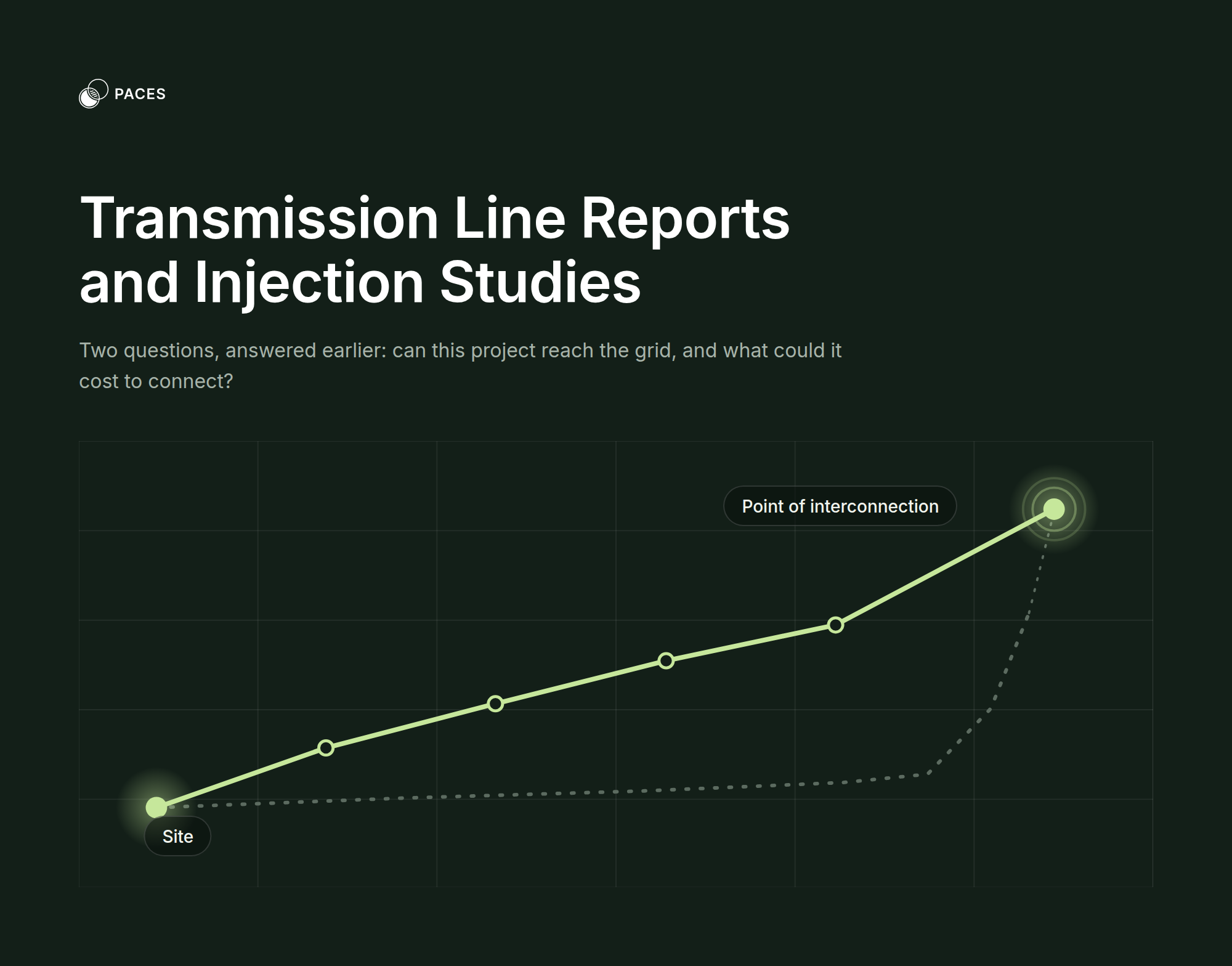
Paces helps developers of every type validate power and site risk in parallel. From automated site scoring and environmental screening to local code review and interconnection studies, delivered in days.
Book a demo to see how it works.
Sign up for emails
Find the right sites faster, assess feasibility with world class data, and track progress across your entire project pipeline with software built to compress your workflow.
.png)